
The Screen-Time Battle You Didn't Know Horses Could Win
Summer break starts and within a week, the fight begins. You set a limit. Your kid finds the loophole. You take the tablet away. They ask for it back in nine minutes. You're not imagining it, and you're not failing at parenting. You're up against something built by teams of engineers whose entire job is to make sure your kid never wants to put the screen down.
You will not out-negotiate that. No chart, timer, or reward system beats a product designed by psychologists to be addictive. But there's one thing that reliably works, and it's not a rule. It's a replacement.
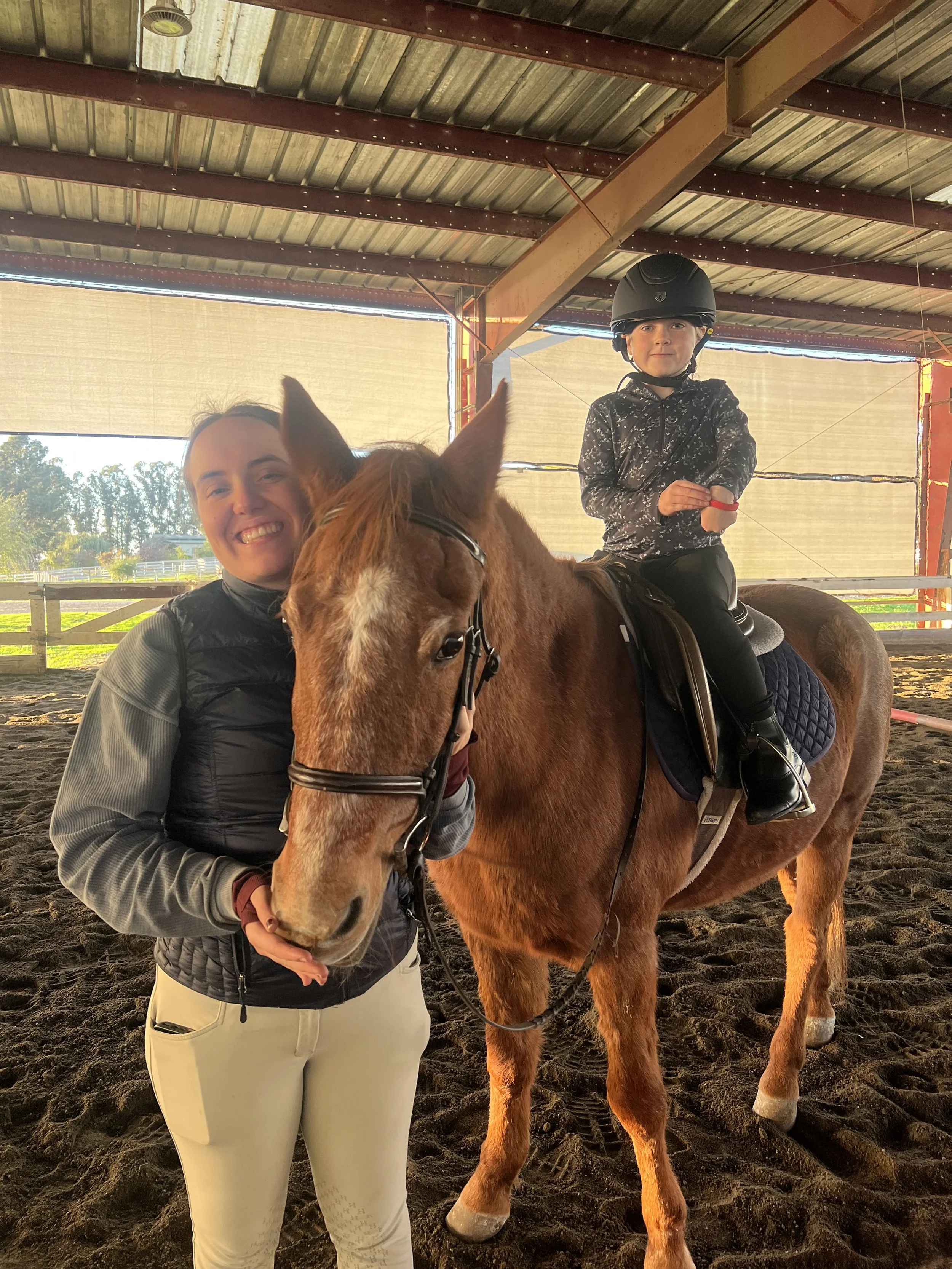
Why Rules Lose and Horses Win
Here's the problem with screen-time limits: they're a fight against something, not a pull toward something. Kids don't put down a phone because you told them to. They put it down when something else is more interesting.
A horse is more interesting.
There's no app that recreates the feeling of a 1,000-pound animal responding to what you do with your hands, seat, and voice. No screen replicates the smell of hay and leather, the wind against your face at a trot, or the moment a horse decides to trust you. Kids don't get bored on a horse. They get absorbed. That's the difference between a distraction and an experience.
At Strides, we're not anti-screen. We're pro-alternative. Give a kid something that demands their full attention and rewards it immediately, and the phone stops being the most interesting thing in the room.
What a Horse Demands That a Screen Never Will
Scrolling asks nothing of you. A horse asks everything of you, and that's exactly the point.
Presence. You cannot check a notification while asking a horse to canter. Horses read body language instantly. A distracted rider gets a distracted horse. Kids learn fast that being fully present isn't optional here, it's the whole deal. That kind of forced presence is rare for kids right now, and it's exactly what a lot of them are missing.
Consequence. Screens are engineered to never really let you fail. Miss a level, hit retry. A horse isn't like that. If you're not clear and confident in what you're asking, the horse won't just do it because you tapped a button. Kids learn that actions have real, immediate consequences again, and that lesson doesn't come from a device.
Patience. Nothing about riding is instant. You don't master a canter transition in one try. You don't build trust with a horse in one visit. That slow build is uncomfortable for a generation raised on instant everything, and it's also exactly what builds resilience. Kids who ride learn to sit with not being good at something yet. That skill transfers to everything else in their life.
Confidence that's actually earned. A screen can give a kid a badge, a like, a high score. None of that required them to overcome anything real. Getting a 1,200-pound animal to trust and respond to you? That's confidence built from something true. It doesn't evaporate the second the device is off.
This is the core of what we do at Strides. We teach kids and adults to ride while building confidence, resilience, passion, and joy through what horses can do for a person that nothing else can. Screen time isn't the enemy we're fighting directly. We're just offering something better, and horses win that comparison every time.
Why Summer Is the Moment This Actually Works
During the school year, screens compete with homework, sports, and packed schedules. Summer removes most of those competitors. Suddenly your kid has hours of unstructured time, and screens are the path of least resistance.
That's exactly why summer is the best time to introduce riding. You're not trying to squeeze one more activity into an already full week. You're filling a real gap with something that actually holds their attention instead of just occupying it.
And Sonoma County in the summer is built for this. Warm mornings, fresh air, the kind of weather that makes being outside easy instead of a fight. Kids who start riding in June or July aren't just avoiding a summer of screens, they're building a skill and a relationship with an animal that carries into fall, into the next season, into who they become as a rider.
What This Actually Looks Like at Strides
We're not asking you to hand your kid over for a scared-straight boot camp version of horseback riding. Our lessons at our Petaluma location start where your kid actually is, whether that's a total beginner or someone who's been begging for lessons since they were four.
A typical first lesson isn't about jumping on and galloping off into the sunset. It's grooming, it's learning how a horse thinks, it's building the kind of trust that makes everything after that possible. Kids leave tired in the good way, the way that comes from actually doing something instead of sitting still for three hours.
Parents tell us the same thing over and over. Their kid comes home from a lesson and doesn't ask for the tablet. They're talking about the horse. They're already thinking about next week. That's not because we told them to put the screen down. It's because while they were here, they had something better.
The Bigger Trade You're Actually Making
This isn't really about screen time. Screen time is just the symptom that gets parents' attention. What you're actually deciding is what fills your kid's summer, and by extension, what shapes the kind of person they're becoming.
A summer spent mostly on screens teaches passive consumption. A summer that includes riding teaches responsibility, patience, physical confidence, and a relationship with an animal that depends entirely on how present and consistent your kid chooses to be. Those are not small differences. They add up.
You don't need to win the screen-time fight with more rules. You need to give your kid something worth choosing instead.
Ready to Try It?
If you're picturing your kid trading a summer of scrolling for a summer of actually being outside, building something real with a horse, we'd love to have them. Lessons are open at our Petaluma location, and summer is exactly the right time to start.
Book an intro lesson, and see for yourself what happens when a screen finally loses.