
When you watch a riding lesson, you might see the horse walk into the arena brushed and tacked up, spend some time with a rider, then head back to his stall or paddock. This is just a small part of his day.
By the time he walks into the arena, he’s already had breakfast, and someone at the barn has had a chance to see how he’s doing. There’s plenty going on after the lesson, too. Here’s a look at the hours families don’t usually see.
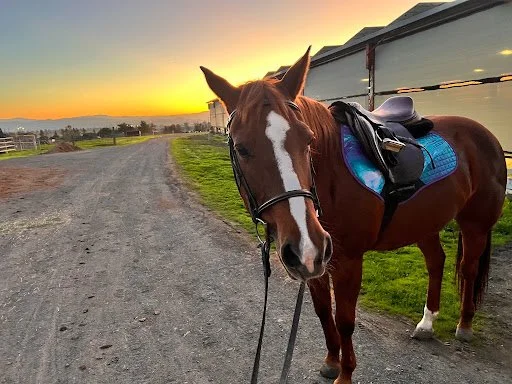
A Day in the Life of a Lesson Horse
Every barn runs a little differently, and the routine can change with each horse, the weather, and the lesson schedule. But, a typical day might look something like this.
Early morning — Breakfast, fresh water, and a quick check to see how he’s doing.
Mid-morning — Turnout in a paddock or pasture.
Afternoon — Grooming and tacking up if he has a lesson that day.
After the lesson — Time to cool down, a brush or rinse as needed, and back to his paddock or stall.
Evening — Dinner, hay for the night, and a final check.
Somewhere in there, he fits in a nap. Probably more than one.
Breakfast Comes First
Horses are built to eat small amounts over many hours. That’s why forage, such as hay or pasture grass, is the foundation of a horse’s diet. A 1,000-pound horse might eat around 20 pounds of hay in a day if hay is his main feed. The amount varies with the horse and what else he eats.
A pony who gains weight just looking at grass may need a different feeding plan from an older horse who has trouble keeping weight on. Some horses get pellets or another feed alongside their forage. The barn team pays attention to what each horse eats and how he’s doing on that plan and makes constant adjustments to accommodate changing needs.
Fresh Water All Day
A 1,000-pound horse can drink around 10 to 12 gallons of water a day. He may drink more when it’s hot or he’s working. Checking, cleaning, and refilling buckets and troughs is one of those barn jobs that keeps coming around.
Turnout Is Where Horses Get to Be Horses
Turnout means time out of the stall in a paddock or pasture. It gives horses room to move, time to graze where grass is available, and a chance to spend time near other horses.
Out in turnout, you might see a horse roll in the dirt, doze in the sun, or stand head to tail with a buddy so they can swish flies away from each other’s faces. There can also be a horse with strong opinions about his neighbor who is not afraid to show it.
Who goes out with or next to whom takes a lot of juggling to manage needs and personalities. Spend enough time around horses and you’ll start to notice which ones choose to stand together.
What We Notice While Grooming
Grooming gives us a chance to look closely at a horse and notice any small issues. A little warmth in a leg, a scrape hiding under the mane, a rubbed spot where the saddle pad sits. Picking out hooves is also a chance to clear away mud and stones and see how each foot looks.
The people who care for the same horses every day get to know what’s usual for each one. They might notice a horse who’s slower to start his breakfast or who shifts his weight differently while being brushed. Those little details can be easy to miss on a busy afternoon and are also great information to pay attention to to keep track of the horses’ needs.
How Lesson Horses Spend Their Time Between Rides
Parents sometimes ask how many lessons a horse teaches. It depends on the horse, the length and intensity of the lessons, and what else he’s doing that week. Age and fitness matter, too.
Time between lessons might include turnout, groundwork, a lighter day, or a day off. Some of the most experienced teachers at a barn are horses in their late teens or twenties. Their schedules can change as they get older, just like their feeding plans change.
Horses Sleep Differently Than We Do
Horses sleep in short stretches. They can doze standing up, and they lie down for REM sleep. That’s one reason a comfortable place with enough room to lie down matters
If you see a horse stretched out in the sun, he may be taking a nap. If you’re unsure about what you’re seeing, ask someone at the barn. We’re happy to take a look with you.
What the Farrier Does
Hooves grow continually, a bit like fingernails. A farrier trims and balances them and fits shoes for horses who need them. Horses are typically seen by a farrier every six to eight weeks, though the timing depends on the horse, hoof growth, and season.
If you catch a farrier at work, watch the horse for a minute. Standing quietly while someone holds up a foot takes practice. It’s a small barn skill with a very practical purpose.
Vet Visits and Dental Care
Wellness exams, vaccinations, dental checks, and parasite control are all part of a horse’s care. The veterinarian helps decide what each horse needs and when. Fecal tests can help guide parasite control, and dental exams can catch sharp edges or other changes that make chewing uncomfortable.
There are also the visits nobody penciled in, like when a horse is limping or has a cut that needs a closer look. A lot of horse care happens on ordinary days, well away from the arena.
Sonoma County Weather Changes the Day
A cool, foggy morning in Petaluma can give way to a warm afternoon. On hot days, turnout or work may happen earlier, with shade and fresh water close by. When the rain comes, mud becomes a daily topic and hooves may need extra attention. The routine shifts with the weather and with what each horse needs.
Why This Matters When You’re the Rider
Spend a little time at the barn and you start to notice things. Hay being carried out. Buckets being filled. The farrier pulling in. A horse who’s found the one muddy spot in the paddock right after being brushed.
At Strides, horse care is part of what riders learn from day one. As they progress through our Levels System, they get more practice grooming, handling horses, and noticing what a horse is telling them through his body language. Over time, a rider might notice when her horse needs a moment to settle or remember to check in with her instructor about how he’s doing. That is all a part of horsemanship!
A Few Questions Families Ask
Do lesson horses get days off?
Yes. A lesson horse’s workload can include lighter days and days off. What that looks like depends on the individual horse and the work he’s doing that week.
Can beginners learn horse care during riding lessons?
Yes. At Strides, beginners start learning horse care from day one. Grooming and noticing a horse’s body language help riders get to know the horse they’re working with.
The Next Time You’re at the Barn
When you see a horse walk into the arena, think about what came before that moment. Breakfast, a dirt roll, maybe a nap in the sun, and someone who knows him well enough to notice when something’s a little different.
If your child is curious about horses and wants to try riding, book an Intro Lesson at Strides in Petaluma. We’re happy to answer your barn questions while you’re here at Strides Riding Academy
For more time around horses during school break, take a look at summer camps at Strides.