
Why Horses Don’t Always Do What You Ask the First Time
If you've ever watched someone ride a horse, it can look almost effortless.
The rider gives a small cue, the horse responds, and off they go.
But what happens when the horse doesn't respond right away?
Maybe you ask for a walk and your horse takes an extra second.
Maybe you turn left and your horse seems more interested in what's happening across the arena.
Or maybe you ask for something you've practiced before and get a completely different response.
It doesn't mean something has gone wrong.
In horseback riding, horses are part of the learning. Every horse has a different personality, way of moving, and way of responding to its rider. Learning how to communicate with that individual horse is part of what makes riding so interesting.
Sometimes the best riding moments come from figuring out what works together.
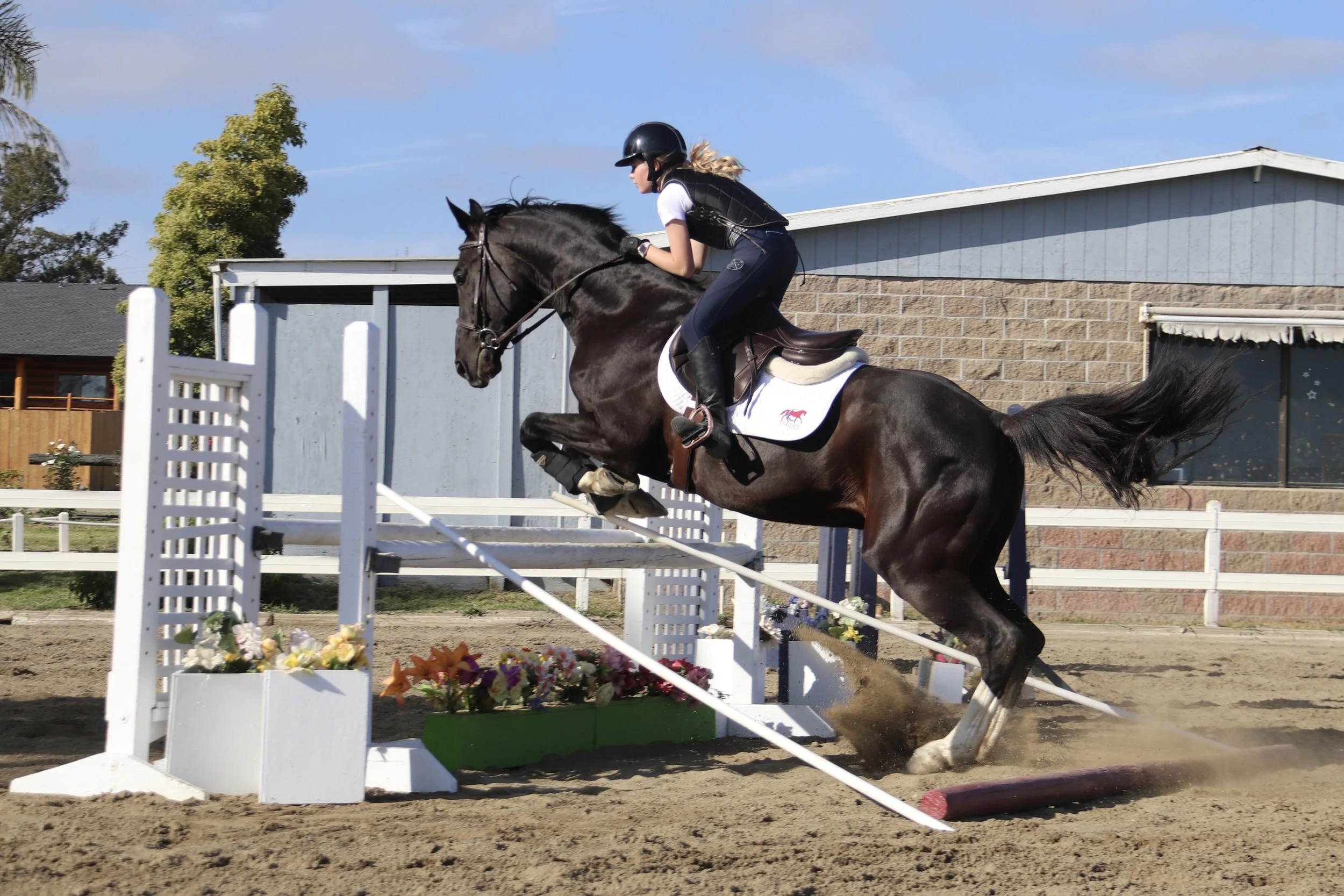
Horses Aren't All the Same
One of the fun things about spending time around horses is realizing just how different they can be.
One horse might be quick to respond to a cue.
Another might take a little more time.
One may be naturally forward and energetic, while another is more laid-back.
Some horses are highly curious about everything happening around them. Others seem perfectly happy to keep doing their job while the rest of the world carries on.
So when a rider gives a cue and doesn't get the exact response they expected, the answer isn't always that the horse is being difficult.
The horse may have a different way of responding.
Learning those differences is part of horseback riding and horsemanship.
What Does a Riding Cue Mean to a Horse?
Riders communicate with horses primarily through their bodies and voices.
A cue can come from the rider's legs, seat, hands, posture, or voice.
For example, a rider may use their leg to ask a horse to move forward, their reins to help guide or slow the horse, and their seat and body position to communicate along with those aids.
Over time, horses learn what these signals mean.
For a beginner, this may sound like a lot to remember, but riders don't have to figure it all out at once.
That's what riding lessons are for.
You learn one skill, practice it, get comfortable with it, and gradually add more.
Before long, things that once required a lot of thought can start to feel much more natural.
Why Doesn't My Horse Respond Right Away?
There are several perfectly normal reasons a horse might take a moment to respond.
Your Horse May Be Thinking
Horses don't always respond at exactly the same speed.
A rider may give a cue, and the horse may need a moment to process it.
That's not necessarily a problem. It can be part of learning to develop good timing and communication.
Rather than immediately assuming the horse didn't listen, riders can learn to pause and see what happens.
Sometimes the response is coming.
Your Horse May Be Distracted
Horses notice their surroundings.
A new sound.
Another horse that is moving nearby.
Someone walking past the arena.
A bird flying overhead.
Or, for reasons known only to the horse, something on the other side of the arena that suddenly deserves serious investigation.
A horse noticing its surroundings is normal.
As riders become more experienced, they learn to recognize when their horse's attention has shifted and help bring it back to the task.
The Cue May Need a Little Practice
Riders are learning too.
When you're new to horseback riding, your body is still getting used to the movements and positions involved.
You might give a cue a little too softly one time and a little too strongly the next.
That's part of the learning process.
With practice, riders become more consistent with their hands, legs, seat, and timing.
And horses learn those patterns along with them.
Do Horses Understand What We're Asking?
Yes, horses can learn to respond to specific cues, but they don't understand riding instructions in the same way people do.
They learn through repetition and association.
If a certain leg cue consistently means “move forward,” the horse learns that connection.
If a particular rein and body position means “turn,” the horse learns that too.
This is why horse and rider communication develops over time.
It's less like giving a verbal command and more like learning a shared language.
The more familiar the signals become, the easier the conversation can feel.
What If the Horse Does Something Different?
This can be one of the most useful parts of a riding lesson.
Imagine you're asking your horse to turn left.
Instead, the horse continues straight.
That doesn't have to become a frustrating moment.
Your instructor can help you figure out what happened.
Maybe the cue needs to be clearer.
Maybe your body position changed.
Maybe the horse wasn't paying attention.
Maybe you need another try.
You make a small adjustment and try again.
That's learning.
And when the horse makes the turn the next time, you have learned something together.
This Is Why Riding Lessons Aren't Just About Riding Around
A horseback riding lesson isn't just about getting on a horse and going around an arena.
Riders are learning how to communicate with an animal that has its own movement, personality, and awareness of the world around it.
That's part of what makes horseback riding different from many other activities.
You aren't working with a machine that responds exactly the same way every time.
You're building a relationship with a horse.
That relationship develops through consistency, clear cues, patience, and lots of practice.
Why Beginners Shouldn't Worry About Getting Everything Right
If you're considering horseback riding lessons for your child or thinking about trying riding yourself, one of the most important things to know is that you are not expected to arrive knowing how to communicate perfectly with a horse.
Beginners are beginners.
That's the whole point.
Your instructor is there to explain the cues, help with your position, and guide you through the process.
The horse you're riding is also part of that learning experience.
You may give a cue and get a response that surprises you.
You may try something twice before it clicks.
You may have a lesson where one skill feels easy and another takes a little more practice.
That's normal.
And it doesn't mean you're bad at riding.
It means you're learning.
Why Do Riders Practice the Same Skills More Than Once?
If you've ever watched a riding lesson, you may notice that riders don't learn a completely new skill every few minutes.
They may practice walking, stopping, steering, transitions, or changing direction several times.
There's a reason for that.
Repetition helps riders become more comfortable and consistent.
It also gives the horse and rider a chance to understand each other better.
The more familiar a cue becomes, the less a rider has to think about every tiny movement.
Eventually, something that once felt like:
“Okay... leg here, hands there, look this way... did I do that right?”
can become:
“Turn.”
And the horse knows what you mean.
That's a pretty rewarding feeling.
What If My Child Gets Frustrated?
It's completely normal for a young rider to feel frustrated when something doesn't work the first time.
Parents may see it and wonder if their child is struggling with riding.
Often, it's simply part of learning something new.
A good instructor can turn that moment into another opportunity to learn.
Instead of focusing on the fact that the horse didn't respond as expected, the rider can learn to ask:
What can I try differently?
That small shift can make a big difference.
The rider becomes more curious about the horse instead of frustrated with the horse.
And sometimes, the second or third attempt works beautifully.
What About Adult Beginners?
Adults can have the same experience.
You might be used to learning quickly in your work or everyday life, then discover that horseback riding asks you to coordinate your body in a completely new way.
That's okay.
You don't need to be naturally athletic.
You don't need to know horse terminology before your first lesson.
And you certainly don't need to know how to communicate with a horse before you've had the opportunity to learn.
That's where beginner horseback riding lessons come in.
You learn the basics, practice them with guidance, and gradually become more comfortable.
The Best Part? You Start to Notice More
As riders gain experience, they begin noticing little things they might not have seen during their first few lessons.
A change in the horse's ears.
A shift in attention.
A different rhythm in the walk.
A horse becoming more responsive to a familiar cue.
A rider becoming more comfortable with their own position.
Those small details are part of becoming a better rider.
You aren't just learning how to tell a horse what to do.
You're learning how to notice what the horse is telling you, too.
Sometimes the Horse Has a Different Answer
Horses don't always respond exactly as we expect.
And that's okay.
A different response can give a rider something new to notice, learn, and practice.
Maybe your horse needs a clearer cue.
Maybe you need better timing.
Maybe the horse was distracted.
Or maybe you need another try.
With a supportive instructor and the right horse, these moments become part of the experience not something to be afraid of.
Because horseback riding isn't about making every ride perfect.
It's about learning to communicate, building skills, getting to know your horse, and enjoying the process.
And when you give a cue and your horse responds just the way you hoped?
That's a pretty great feeling.
Ready to Give Riding a Try?
At Strides Riding Academy in Petaluma, California, riders learn real horse skills from the beginning in a supportive lesson environment. Whether you're looking for beginner horseback riding lessons for your child or you're an adult who has always wanted to try riding, you don't need to have everything figured out before you start.
You just need to be willing to learn.
The horse will meet you there.