
What Your Child's First Few Months at Strides Actually Look Like
You signed up for lessons! Maybe you booked an intro lesson on a whim, or maybe your kid asked so many times that saying yes just felt easier than saying no again. Either way, here you are, and now you're probably wondering what actually happens next.
We get asked this a lot. Not "will my kid like it" (they usually do), but the more practical stuff. What does a lesson actually look like? How fast do kids move up? What does ‘normal’ progress look like over the first few months?
Here are some answers! This is roughly what the first few months at Strides look like, start to finish.
The First Day: Meeting Her Horse and Getting Right to It
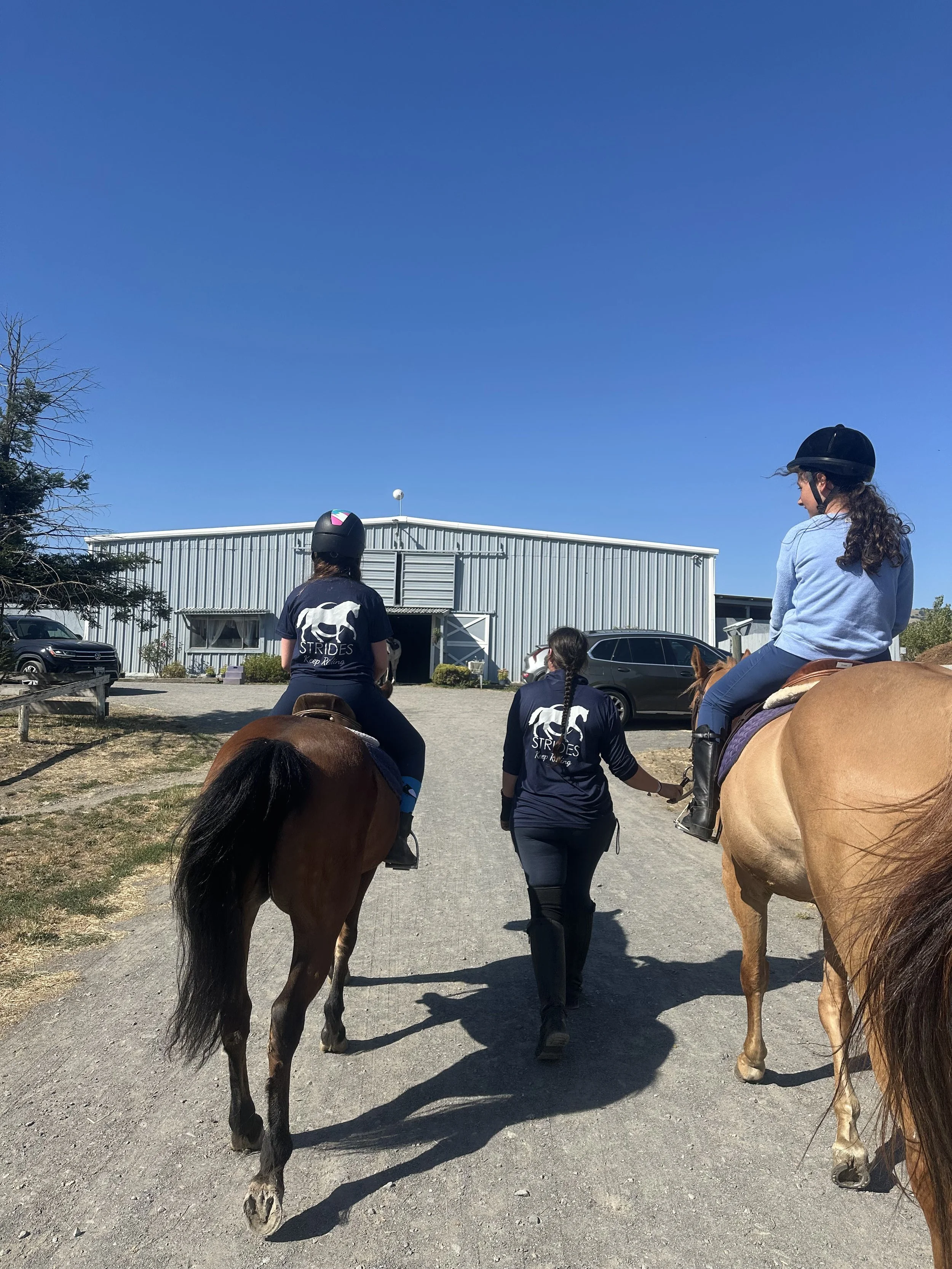
Your kid's first lesson starts with meeting her horse. An instructor walks her through the basics of saying hello the right way, and how to read a horse's ears and body language, so she feels confident and safe from the very first minute. Then she gets right into it: leading her horse, and getting up in the saddle for real riding time the same day.
Some kids are a little nervous at first, and that's completely normal. Some kids walk in like they've been doing this their whole life. Either way, by the end of that first lesson, most kids already have a favorite horse, a story to tell you in the car, and a taste of what riding feels like.
Week Two and Three: Grooming Becomes the Best Part
By the second or third lesson, something usually shifts. Your kid stops being nervous and starts being excited about the small stuff. Picking out hooves. Brushing out a mane. Figuring out which horse likes to be scratched right behind the ears.
We spend time on grooming and horse care early on, and it's not just busywork before the "fun part." It's actually one of the most important parts of learning to ride. A kid who knows how to properly groom and tack up a horse understands that animal a lot better once she's in the saddle. She's already learned to read its mood, notice when something's off, and build a little bit of trust before she ever asks it to move.
This is usually also when kids start asking to come early, so they have more time with their horse before the lesson even starts.
Riding Starts Clicking
The first few rides are mostly about balance and getting comfortable. Sitting up straight. Holding the reins the right way. Walking calmly around the arena while an instructor stays close by.
It doesn't look flashy from the outside, but for a kid, it's a big deal. There's a moment, usually somewhere in the first month, where you can see it click. She's not thinking about her hands or her feet anymore. She's just riding, and she knows it, and the grin on her face says the rest.
From there, things start moving. Trotting comes next, and it's usually a little bumpy and a lot of giggling before it becomes smooth. Kids learn to steer using their body instead of yanking on the reins, and they start understanding that a horse responds to calm, clear signals, not force.
The Levels System: Why Your Kid Always Knows What's Next
Here's something that sets Strides apart from a lot of programs. We don't just throw kids into lessons and hope they figure out where they stand. We use something called the Levels System, and it's really just a clear path that shows your kid exactly what she's working on and what comes next.
Some kids move through the levels quickly. Others take their time, and both are completely fine. The point isn't speed. The point is that your kid never has to wonder if she's doing okay. She knows exactly what skill she's building and what she gets to try once she's got it down.
Parents like this part a lot too, honestly. Instead of a vague "she's doing great," you get to see actual progress. First it's balance at a walk. Then steering. Then trotting on her own. Then eventually, cantering, and taking on more responsibility with her horse's care.
The Friends Show Up Faster Than You'd Think
Somewhere around the one-month mark, you'll probably notice your kid talking about barn friends instead of just horses. This tends to happen fast, and it's one of our favorite parts to watch.
Kids at the barn end up grooming next to each other, cheering each other on during lessons, and comparing notes on which horse is their favorite. Age doesn't really matter much here. A nine-year-old and a twelve-year-old will happily work side by side, because they're all there for the same reason.
If you're hoping your kid finds a group of friends who get excited about the same thing she does, this is usually where it starts. Not through anything we plan on purpose, just from kids showing up together, week after week, working toward the same goals.
Camps, Shows, and What Comes After Lessons
Once your kid has a few months of lessons under her belt, a few other doors start to open. During school breaks, we run camps that give kids more time in the saddle and more time around the horses, without needing to fit it around a weekly schedule.
Some kids also decide they want to try showing. Our first shows are low-pressure and honestly more about the experience than the ribbons. It's a chance for your kid to see how far she's come, ride in a new setting, and cheer on her barn friends doing the same thing.
For kids who really fall for it, there's a longer road too. Older students who want to keep growing can compete through IEA, or take on an apprenticeship at the barn, which means more responsibility, more time with the horses, and a real head start if riding turns into something she wants to stick with long term.
What You Can Expect to Notice as a Parent
You don't need to be at the barn every second to notice the shift. It usually shows up in small ways first. She talks about her horse at dinner. She wants to leave earlier so she has more grooming time. She starts using words like "cue" and "canter" like she's always known them.
A little further in, you might notice other things too. More patience with things that don't go right the first time. A little more confidence speaking up, whether that's asking a question in a lesson or telling you what she needs. A kid who used to want everything perfect on the first try starts being okay with practicing something a few extra times before it clicks.
Every kid is a little different, and honestly, that's part of what makes it fun to watch. But these are the kinds of things we hear about again and again from parents a few months in.
Ready to Get Started?
If you're still in the "should we actually do this" stage, here's the short version. Start with one intro lesson. No pressure to commit to anything beyond it. Your kid gets matched with a horse suited to her comfort level, walks through the basics with an instructor, and gets a feel for what riding here is like.
From there, if she wants more (and most kids do), she moves into regular lessons and starts working her way through the Levels System at her own pace. It really is that simple to get going.
Come See It for Yourself
Reading about it only gets you so far. The best way to know if this is the right fit for your kid is to bring her out and let her meet the horses herself.
We're at the barn in Petaluma, and we work with families from all over Sonoma County who are figuring out the exact same thing you are right now. Come see the barn, meet the horses, and let your kid tell you the rest.
Start the journey. Book an intro lesson today.