
Think about someone you know who's a genuinely good leader. Confident, maybe vocal, someone who can take charge when the situation calls for it. But also actually good at it in a way that goes beyond that. The kind of person people follow without being told to.
If you think about what makes them different, it's usually not that they always have the right answer. It's that they read the room before they open their mouth. They notice when someone's checked out. They adjust when something isn't working, without making a big deal out of it. They're present in a way that most people aren't.
That skill has a name. It's called awareness: situational, social, self. And it's genuinely hard to teach.
Here's the thing most people don't know: horses teach it faster than almost anything else. And they start teaching it the minute a kid walks into the arena.
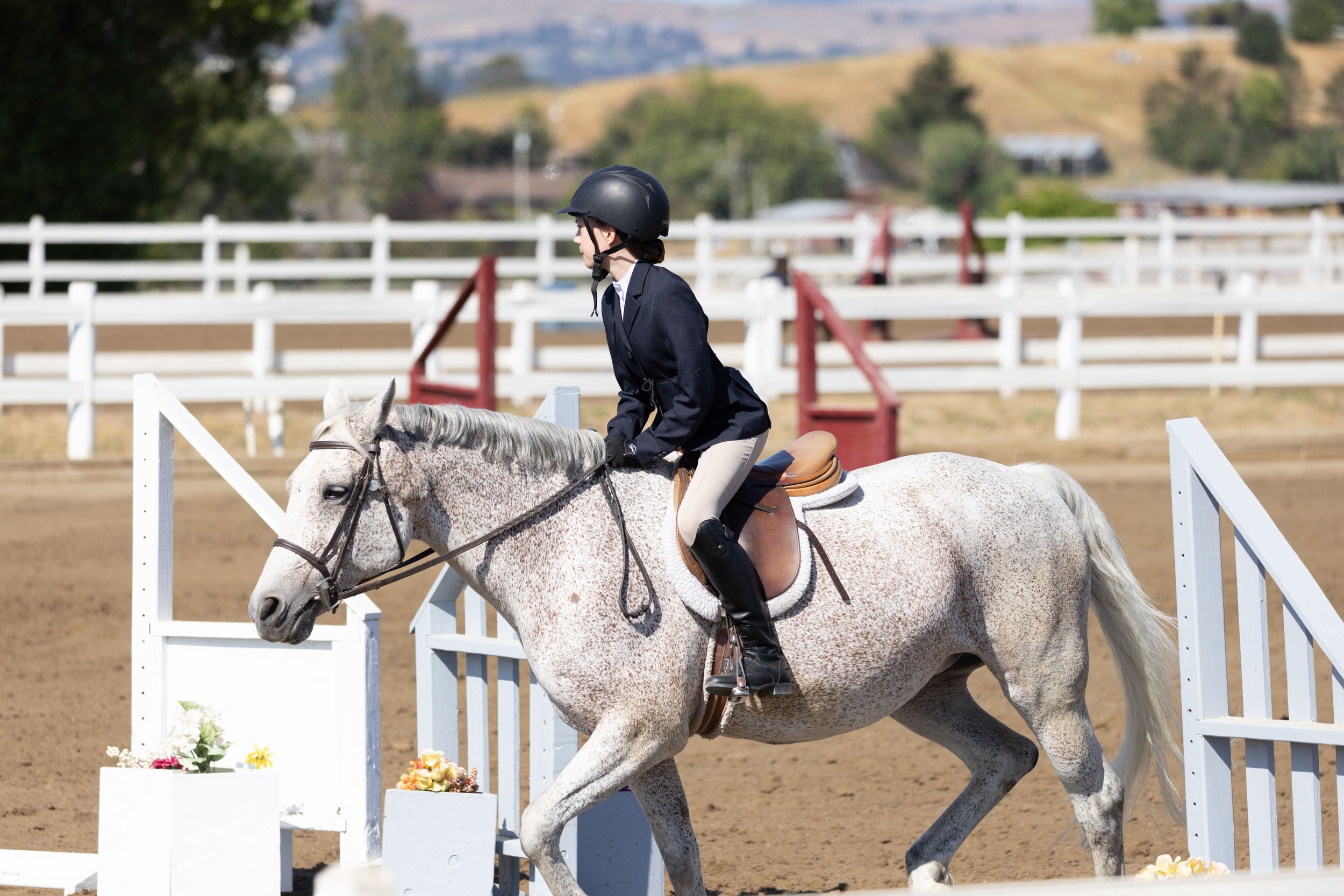
Why the Arena Surprises Almost Every Kid (In the Best Way)
There's an assumption most people carry without realizing it: that leadership has a look. The child who volunteers first, takes charge in group projects, moves through a room with obvious confidence. That's the one we picture when someone says "natural leader." And honestly, that child often does lead well.
But the arena adds something to the picture that most environments don't.
What horses respond to isn't just confidence or decisiveness. They also respond to steadiness, to clarity, to the ability to stay present and regulated when something unexpected happens. Which means the assertive kid who's great at taking charge learns to add awareness to that toolkit. And the quieter kid who's used to watching before acting discovers they already have a version of something horses respond to really well.
In a herd, the leader isn't just the one who acts fastest. It's the one the others trust to be consistent and unrattled when the situation changes. The arena teaches every kid, regardless of their natural personality, a layer of that. The bold kids learn to direct their energy more precisely. The reserved kids discover they can step up when it counts.
What's interesting is that most kids don't see it coming. An assertive kid expects to feel in control quickly and finds out there's more nuance to it than they thought. A quieter kid expects to feel out of place and finds out the horse responds to them in a way that catches them off guard. Both walk away with something new. That's what makes it work for pretty much every personality type that comes through the barn.
What Awareness Actually Looks Like in the Arena
It shows up in small moments, over and over.
A rider is working on getting their horse to slow down. They're pulling on the reins, which is the instinct, but the horse is resisting. An instructor watches for a second and then says: "What's your body doing?"
The rider pauses. Their legs are gripping. Their shoulders are up near their ears. Their jaw is tight.
They're asking for calm while their entire body is radiating tension. And the horse, who can feel all of it through the saddle and the reins, is responding to the tension. Not the cue.
The fix isn't pulling harder. It's noticing what they're putting out and changing it. Loosen the leg. Drop the shoulders. Breathe. Ask again, the same ask, but quieter in the body.
The horse softens. The rider didn't change the request. They changed the energy behind it.
That's situational awareness. That's reading what's happening right now, adjusting in real time, and trying again. Kids who learn to do that with a horse take it with them. Into group projects. Into team sports. Into friendships that get complicated. Eventually, into the workplace.
Why Leaders Need This Skill Specifically
The best leaders are assertive and tuned in. One without the other only gets you so far.
They notice when the energy in the room shifts. They catch when someone's disengaging before it becomes a problem. They know the difference between when to push and when to back off, not because they read a book about it, but because they've developed the instinct to pay attention.
Most kids don't get a lot of practice building that instinct. They're rewarded for output: grades, points, performance. But the skill that makes someone worth following is quieter than any of that. It's the ability to slow down, read what's actually in front of them, and respond to that, not just to what they expected or planned for.
Horseback riding gives children a repeatable environment to practice exactly this. Every ride is different. The same horse on a different day is a different conversation. What worked last Tuesday might need to be adjusted today because it rained this morning and the arena is louder and the horse is more alert than usual. Riders learn to notice all of that and adapt, not complain that the horse isn't cooperating, not do what they planned regardless of what's happening. Adapt.
That's the skill. That's the one that follows them out of the barn.
The Difference Between Being in Charge and Being in Control
Assertiveness is genuinely useful in the arena. Horses need a rider who's clear, decisive, and willing to actually ask for something. A hesitant, wishy-washy cue is more confusing to a horse than a firm one. So if your child is naturally assertive, that's a real asset here.
What the arena also teaches them, though, is that assertiveness works best when it's paired with awareness. A rider who's naturally confident and decisive will often come in ready to take charge, and that energy is great. But there's a specific moment that tends to happen, usually in the first few rides, where they try to push through something with the horse and the horse pushes right back. They get firmer. The horse gets more resistant. And suddenly being in charge and actually being in control feel like two very different things.
A horse makes that distinction concrete in a way that's hard to argue with. The assertive energy is not the problem. The missing piece is learning to direct it, to know when to press and when to soften, when to hold steady and when to release. That timing is what turns assertiveness into real influence, and real influence is what makes a leader others actually want to follow rather than just comply with.
Children who figure that out carry it into everything. They learn that you can be confident and still read the room. That you can be the one steering and still be responsive to what's happening underneath you. The assertiveness stays. It just gets a whole lot more effective.
What Parents Actually See
Parents who bring their children to Strides for the riding usually start noticing something else a few months in.
Their child is more patient without losing their drive. They're better at reading when someone is frustrated before it turns into an argument. They recover faster when something doesn't go the way they planned. They still go after what they want, they're just smarter about how they get there.
None of this gets announced. Kids don't come home and say "I learned situational awareness today." It just starts showing up: in how they handle a disagreement with a sibling, in how they respond when a group project goes sideways, in how they carry themselves when something is hard.
That's what months of being honest with a horse does. It builds the quiet skills that make the loudest difference later.
Start at Strides Riding Academy
Leadership is one of those things everyone agrees matters and almost nobody teaches directly. It gets talked about in school assemblies and listed on college applications, but the actual practice of it, the noticing, adjusting, earning trust, reading the room, has to be built somewhere.
At Strides Riding Academy in Petaluma, that's what happens, one lesson at a time. Kids come in to learn to ride and leave with something a lot harder to quantify, and a lot more useful.
Intro lessons are open to beginners starting at age five. No experience needed, just a willingness to show up and pay attention.
Because the best leaders don't just speak well. They listen first. And there's no better teacher for that than an animal who's been doing it all along.